Showing posts with label Sword-tag. Show all posts

Thursday, December 24, 2009

The Word of God

We have not had the sword tag group out in awhile but today, on Christmas Eve day, we are hosting the group. I think we are expecting about 7 or 8 teens but I'm not sure how many will actually show up. The following is a little study I wrote up this morning...though really it is more of a directed conversation! :-) I'm hoping it will spark discusssion and further research on the part of these young men.

Here is the study (I will post a p.s. later today!):
__________________________________________


The Word of God
December 24, 2009

Ask: What is the Bible?

It is a collection of books written by men who were inspired by the Holy Spirit, therefore the very Word of God.
Two key passages that substantiate this are 2 Timothy 3:16-17 & 2 Peter 1:16-21

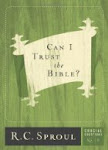
R.C. Sproul writes that it is a fallible collection of infallible books…what does this mean?

• Every book in the Bible is infallible (meaning incapable of error)
• The order of the Bible itself is not infallible, but the content of the books themselves only

The Bible is not a textbook for history or science, but when it speaks on such things it is correct. The purpose of the Word of God is specifically to communicate to man the plan of God and His desire for our lives. By it we are to order our lives and judge the things we do and the things we do not do (see 2 Peter 1:3)

As Christians, the Bible is the ultimate authority for things…we may use the writings of learned men to guide us and help us understand the Truth, but it is the Bible that we turn to in the end. No matter how godly, no matter how intelligent…if anyone tells us something contrary to what the Bible teaches, we are to turn away from them. Paul himself warned Believers of this thing in Galatians 1:6-9. We also hear from Jude that our faith, which is founded on the very words of God, was “once for all delivered to the saints” (Jude 3).

Finally, Jesus the Lord demands our obedience. He says in John 14:15 that if we love Him we are to keep His commandments. Such a command could not be given and then those commands hidden from us could they? No, of course not!

So this is a very basic overview of what the Bible is and what it means to us…it is an affirmation of the term sola Scriptura, one of the five solas of the Protestant Reformation:
• Sola Scriptura (Scripture alone)
• Sola Fide (Faith alone)
• Sola Gratia (Grace alone)
• Solus Christus (Christ alone)
• Soli Deo Gloria (Glory to God alone)
Are there any questions?

Next time we meet we will discuss the question of how we can trust that the Bible is what it claims to be…or rather, what evidences exist to support our faith in the Word of God?
Close in prayer
UPDATE:
We had a total of seven boys today, the youngest about 12 and the oldest was, I think, 18. I had a great time being defeated by everybody! :-)

Saturday, August 15, 2009

Hebrews 2:5-9

We had 6 boys show up today for the boffer/ sword tag group and we had an exciting time with only very minor wounds, including one I gave to one of the kids :-(

Anyhow, today we studied Hebrews 2:5-9 and here are my notes:
**********************************************************
Intro:
The last time that we looked at this book we discussed:
  • How chapter 1 focuses on the supremacy of Christ over the angelic beings
  • How Jesus is uniquely the Son of God, the second Person of our Triune God
  • How the first 4 verses of chapter 2 use the content of chapter 1 as the exhortation to remain faithful in the midst of terrible persecution...if Christ is whom He says He is then salvation can only be found in Him

Today, time permitting, we will examine the next 5 verses

Read Hebrews 2:5-9

Again, we've seen the superiority of Christ to the angels laid out by the author throughout chapter 1...and now we return to this theme in the verses before us. Remember that we have been warned not to neglect our salvation because Christ is real, and now we are told again that to do so is folly. You see, verse 5 starts out, "For He has not put the world to come..." See by placing our trust in Christ we place it upon the one to whom all things belong! The world to come is not under the dominion of the angels, why would we put our hope for salvation upon them? Such a thing would be silly! The answer to the question of who will rule in the world to come is one of utmost importance, for it is to this Ruler that our loyalty must be given.

The author of Hebrews then quotes from Psalm 8:4-6, and under the inspiration of the Spirit makes of it an application that relates directly to Jesus! Now clearly we know from the context in Psalm 8 that this is referring to humans. We are insignificant before an Almighty God, and yet He chose to give us dominion over the earth (see Genesis 1:26). And yet, look closely at verse 8...not all things are under the dominion of man are they? (see 2 Corinthians 4:4 & John 12:31)

We do not yet see all things under the dominion of man because there is one thing that man is not master of...one thing that all men must one day face. What is this? DEATH!

And so the words of King David in Psalm 8 do not find their final fulfillment in man, and this is why the author of Hebrews here identifies the true, ultimate subject of this Psalm 8 passage...and it is Jesus our Lord!

Look at verse 9: only Jesus fulfilled the conquest of death in Himself!

Jesus was:
  • made a little lower than the angels, just as man was
  • Jesus suffered death, just like all men do

BUT, unlike any other person ever or since, Jesus conquered death by His own power! Read 1 Corinthians 15:40-58

And Jesus conquered death for His people, did He not? Verse 9 tells us that He died in order to "taste death for everyone." In His death Jesus was crowned with glory and with honor, and He truly fulfilled the words of the psalmist!

What can we learn from all of this:
  • In Jesus, we too are heirs of the glory promised in Psalm 8
  • Because this is true, we must all the more take care that we are truly His...what a travesty to find one day that we were never truly His!
  • Though death has its grip on us now, this will not always be the case.

Knowing that we belong to Him means we need not fear death. I am not saying that death is not a horrible thing...of course it is, that is why it is our enemy. We are not to embrace death foolishly like cult members (remember what Paul said in Philippians 1:21), but neither should we have a paralyzing fear of it. I confess that I fear the manner of my dying...but death itself hold no terror for me because I know exactly where I will be the moment after.

Do you?

Close in prayer

Tuesday, July 21, 2009

The Immensity of the Love of God: A Study of 1 John 4:7-11

Today we had the sword-tag group at and we had one new person visit, the friend of my oldest son. We had a great time although I am now truly starting to feel my advanced age and am quickly defeated by everyone. Still, not only do I get a good work-out, I also enjoy time spent with a bunch of rambunctious teen boys! AND I get to teach! ;-)

Here is the lesson for today:

Read 1 John 4:7-11

Here we see the concern with which John writes...he says to the beloved, to the elect, that we are to love one another. Why are we to do so? Because love comes from God (see Galatians 5:22)! We are not speaking here of what is commonly referred to as love, the infatuation of men towards women and vice versa. No, the love referred to here is that perfect love of God (see 1 Corinthians 13).

Note how verse 7 goes on to say that everyone who loves is born of God and knows God. Then in vese 8 we read that if somebody does not love then they don't truly know who God is because God IS love. Here we see why this does not speak of a merely emotional type of love, for everyone alive can claim that and the Bible is very clear that not all people know God nor will all people know God. What we are to understand here is that if there is one among us who does not have love for the saints, then He does not truly know God. God loves His elect! How can one claim to love God and then hate His people? You would be hating yourself!

But look again at verse 8....God IS love.

Not God loves, but God IS love. What does this mean? Well it means that His very nature is love. He is not merely loving, He is love itself. All that He gives to us, His very special people, is out of a manifestation of His very character.

Many people take this verse and say, "see there can be no hell for God is love". The problem with this is that they take this attribute of God and make it all that He is. But God is not some Greek deity like Aphrodite the goddess of love. He is the God of Israel. We are told by John that God is also light (1 John 1:5) and that He is Spirit (John 4:24). He is also holy. Let us never forget that God cannot be boxed into one thing we read in some random verse we can then use as a proof text for whatever thing we want to teach. No. Taken all together, and in context, we see that the love of God is manifest in His love for His people. The holiness of God demands that sin be punished, but His love and His mercy permit us to receive forgiveness!

We see this so clearly in verse 9, where we read that the love of God, the outflow of His character, is manifested towards us. Towards His chosen people. So the focus of His love is clearly defined here. Remember this is the same John who wrote John 3:16! So we can see so much more clearly what he is writing when we read this verse...the love of God, the mercy of God, has an intended target, and it is us! God, being love, made known this love by sending Jesus into the world, that we might live through Him. Jesus came into the world for His lost sheep. In dying on the cross He attained their salvation by atoning for the sins of His people. Truly He was abe to say on the cross that He had accomplished His work, declaring "It is finished!" (John 19:30) Do you see this? The Father sent the Son for a purpose! This purpose is explained here by John. But we also read in Luke 19:10 that Jesus Himself said that He came to "seek and save that which was lost"!

What, then, is the clearest expression of the love of God? The death of Christ on the cross! Such a horrible event, the second Person of the Trinity suffering and dying for a sinful people. What a travesty! And yet, it was the eternal decree of God that this should happen. It was necessary for the Shepherd to die in order for the sheep to be redeemed. This is love, not just that He died for us, but that such a Perfect Being died for such filthy creatures as us. The Creator of the universe died for that which He created! This is love!

And to understand even better what an amazing thing this is, we read in verse 10 that the picture of love is NOT that we loved God...but that He loved us enough to send His Son to pay the penalty for us! This is exactly what Paul teaches in Romans 5:8 where he says that "God demonstrates His love own love towards us, in that while we were still sinners, Christ died for us."

You see, in our fallen state, we do not love God. And even though the Lord could see the evil of our hearts, He chose to die for us. He loved us even though we were in rebellion against Him...He loved us even though we were unworthy of Him. Can you imagine that? Our natural inclination is to turn away from those who dislike us, let alone those who hate us! But God died for those who hated Him. Truly John will later declare that "we love Him because He first loved us"! (1 John 4:19)

Ask: What do you think of this kind of love? (discuss)

This is a type of love so immense that it can only come from God. And do you know what? There is a reason why John tells us these things...we read it in verse 11 where John now concludes this passage with the following: "Beloved, if God so loved us, we also ought to love one another."

Wow.

Can we live up to this? If God loves us so much that since eternity past He decreed the death of Jesus on the cross, how can we measure up? Is it possible? Well it must be because we are commanded to love one another in the same manner!

How can this type of love be manifested by the saints towards one another? (discuss)

Think about this: God's love was not prompted by anything praiseworthy in us.

In fact, read the following:
-Deuteronomy 7:6-7
-2 Timothy 1:8-9

Nothing in us deserved the love of God. He gave it for His own reasons, because it pleased Him to shower us with it. It is undeserved.

With this in mind, I ask again, how can we manifest this type of love towards one another?

We are to love the people of God even when they are unloveable. We are to forgive the people of God when they offend us, even if they don't ask us for that forgiveness. We are to bless His people even when they sinfully curse us. And, yes, we are to die for them if need be.

I dare not say that any of this is easy, but it is commanded of us. The best way to cultivate this love is to seek Him first. To be so focused on Him and His love that this world means nothing by comparison. When we are in constant awareness of His love for us, of the immensity of the love of God, then exhibiting such a love towards others will come more naturally. I pray we all desire this.

Close in prayer.

Teen Studies

Today we are having the sword-tagging group over and as I'm getting a study ready for it I realized I did not post the last two studies we did! Here for now are those two, and later tonight I will post the one from today.

This first one is from June 30th of this year:
Read Hebrews 2:1-4

The book of Hebrews was written to Jewish Christians who were converts to the faith during a time of intense persecution. From the text, it appears that there were some who thought it might be easier to return to the Jewish faith rather than remain Christians (comment on the irony of this). So the author of this letter, some think Paul, is providing exhortation and even chastisement for these people. We know, of course, that ulimately the Author is God.

So keeping this thought in mind, let us quickly discuss what has come in the 1st chapter of this letter:
1) God speaks to His people in diff. ways
2) The Son is higher than all created creatures, indeed, the Son is the express image of the Father, and is called by God by the Psalmist (herein we see the teaching of the Triunity of God).
3) The Son is He through and for whom all things have been made.

We see also that He is worshipped by the angles themselves! Notice Hebrews 1:14 "Are they not all ministering spirits sent forth to minister for those who will inherit salvation?" Who is that? The elect of God, all those who are saved by the blood of Christ!

So all these verses focus on what?
On Christ!

He is the object of chapter 1...it is to His awesomeness that the author is pointing. Why do you think this is? (discuss how if Christ if whom He says He is then why go elsewhere?)

Having learned all this, we can look again at the 4 verses in chapter 2.

"Therefore..."
because of all that has been discussed!

"we must give the more earnest heed to the things we have heard"
pay close attention to because it is worth paying attention!

"lest we drift away"
What does this mean?

the KJV renders this as "to let them slip" and this is a correct reading of the Greek, which is the word pararrhueo, which literally means to flow by.

So unless we pay careful attention to the Word of God, we stand in danger of letting it slip away, of drifting away from that which is true!

How does this work out in the life of a Believer? (discuss lack of Bible reading, lack of church attendance, lack of a consistent prayer life)

But the warning is much stricter here too...

Note verses 2-3
What do these refer to?

The Word of God, the gospel of our salvation, came to us from Christ Himself! He IS the living Word! Not only this, verse 4 tells us that the miracles of the day, the wonders and the gifts of the Holy Spirit, were done as testimony to these truths!

And guess what? Every sin, every transgression of the law will be justly punished by God! All those who live their lives apart from Christ will stand under condemnation. So the warning is here. We have all heard the gospel...the question is how will we respond to it. Human accountability and responsibility stand here exposed to the call of the gospel.

One final thing...Note that verse 4 says all the miracles and signs were done as testament, but according to the will of God. It is never for us to test God by demanding a miracle in exchange for faith. He grants miracles and gifts and healings according to His own will, nothing else.

Read and briefly discuss Hebrews 11:32-40, then close in prayer..
This next study is from July 7th:


Acts 15
The Law & Grace

Read Acts 15:1-5

What's going on here?

There were those men who were saying in order to be saved you must be circumcised right? That, in essence, you had to become a Jew! Here we have the gospel coming to the Gentiles and immediately there are those who would add something to the Gospel. Note that in Romans 10:9 we read that "if you confess with your mouth the Lord Jesus and believe in your heart that God has raised Him from the dead, you will be saved."

But these men from Judea were adding to this...and adding what is not in the Scripture! In Jude 3 we are told to "contend earnestly for the faith which was once for all delivered to the saints." So obviously there are various biblical doctrines to which a true Believer will hold, but in this passage we are seeing true Christians (the brethren) being unfairly judged and held to a false standard by other Christians.

Note that Paul and Barnabas both rightly engage in probably very heated discussion with these men...and so it was decided that the church should hold a council and decide this matter.

Read Acts 15:6-29

We see that the elders and apostles rule in favor of what? Freedom in Christ!

Note verse 10)
Strict adherence and obedience to the law was something impossible to do! The Law itself could save nobody because not one person except the Lord Jesus could actually keep it! And so the Jerusalem council decreed that circumcision was NOT necessary in order to be saved.

What does this mean for us?

If we are no longer bound by the law does this mean we can do anything we want? Of course NOT! (discuss the heresy of antinomianism)

Look with me at Acts 16:1-5

What in the world is going on here?

Paul had Timothy circumcised!

Why?

For the sake of the gospel, but NOT for the sake of salvation (discuss)

Read 1 Corinthians 9:19-23

How do these verses relate to what we've been looking at in the book of Acts?

(Discuss)

Realize this brothers:
Whatever the Bible tells us to do, we must do
Whatever the Bible tells us not to do, we must not do

Aside from this, we are free in Christ to do as we feel right, keeping in mind always to be loving towards those among us who are weaker. But we dare not add to the Scripture and become legalists when the Bible has remained silent on the issue.

Remember that the faith has been delivered once and for all. We have our Scriptures, let us live lives of obedience without adding to the perfect revelation of what God has given us!

Close in prayer

Saturday, February 14, 2009

Our Faith & Our Works: A Study of James 2:14-19

Today was our sword-tag meeting and aside from my two older boys we had 4 additional teens show up, one of them a new one who came with another member. He enjoyed himself and wants to come next time! Three other boys who normally come were not feeling well and did not make it, and then two others have stopped coming...I'm not sure why but I suspect it has to do with parental dislike of my teaching and/or company!

Regardless though, the following is the lesson I presented today for the boys who came. The teaching period went really well, with questions asked and most of the kids taking part in the discussion. I pray the Lord will use what I present to lead these kids to a faithful walk.

Well, here is the lesson:

Our Faith & Our Works:
A Study of
James 2:14-19

Our text today is from James 2:14-26, but first I'd like us to look at a very powerful passage found in Matthew 7:21-23. Here we read the following:

“Not everyone who says to Me, ‘Lord, Lord,’ shall enter the kingdom of heaven, but he who does the will of My Father in heaven. Many will say to Me in that day, ‘Lord, Lord, have we not prophesied in Your name, cast out demons in Your name, and done many wonders in Your name?’ And then I will declare to them, ‘I never knew you; depart from Me, you who practice lawlessness!’"

Jesus is emphatically saying that there are and will be people who do things in His name, and even appear to believe themselves His followers, who are actually headed straight into everlasting hell. Indeed, He refuses them entry into heaven and they complain about this...His reply? I never knew you! Note the ending of verse 23..."you who practice lawlessness!" The works they did, the wonders of which they speak, it was all lawlessnes!

Ask: Why? (Discuss)

Let us set this passage aside for a moment. We will return to it soon, but let us now look at our main text.

Read James 2:14-17

"What does it profit, my brethren, if someone says he has faith but does not have works? Can faith save him? If a brother or sister is naked and destitute of daily food, and one of you says to them, “Depart in peace, be warmed and filled,” but you do not give them the things which are needed for the body, what does it profit? Thus also faith by itself, if it does not have works, is dead."

James appears to be questioning the idea that faith alone can save you, doesn't he? Yet one of the battle cries of the Reformation was Sola Fe! (Faith Alone). This was a clear cry for a return to the biblical concept that your works cannot save you, that only the work of Christ on the cross is able to save anyone. This is one of the principles upon which the Protestant churches (the true ones anyhow) base their teachings. How do we reconcile these words from the pen of James, who was inspired by the Holy Spirit Himself! First of all, remember that there are no contradictions in the Word of God. One of the most important principles of Bible study is that the Scriptures interpret the Scriptures. In other words, we rely upon the whole Bible to help us make sense of any particular passage.

It has often been said that the simplest reading of Scripture is the best. And while there is much truth in that, I say to you that it is the reading of Scripture that aligns correctly with the "whole counsel of God" which is the best! Simplicity is not always best, and such readings often lead to some pretty serious error, including the idea that you can lose your salvation and that Jesus was divine but not God. No, little brothers, when you study any passage of Scripture, seek to understand it in light of other passages. Test it against other portions of Scripture, and then you will find its meaning.

Let us then examine these words of James. You have likely already picked up on it, but one clue is found within this very passage.

The question is asked, what good is it to say you have faith if there is no proof? Encountering people in trouble and saying "I will pray for you" but not doing anything to help them here and now, when you have the ability to do so, is not very helpful. It may give you a pious feeling to say it, but it has not really been helpful! Note that James likens this to a faith without any works. It is as useless to say "I will pray for you" to a naked hungry person as it is to say you have faith but no fruit. You have a faith that is not genuine...it is dead.

Saying "be warmed and filled" does not actually warm or fill a person does it? So saying you have faith but never doing the works that MUST come from a saving faith actually fails to save you. In other words, faith WILL produce works...a lack of works is a pretty good indication that your faith is pretty dead.

Before we proceed, do not misinterpret what I am saying in regards to prayer. I am not saying it is useless to pray. Neither am I saying that if you come to faith but have no works you lose that faith. On the contrary, I want to show you that James is teaching that if your faith produces no works it was never true, genuine, and saving faith. We will see this much more clearly in the next few verses.

Read James 2:18-20

"But someone will say, “You have faith, and I have works.” Show me your faith without your works, and I will show you my faith by my works. You believe that there is one God. You do well. Even the demons believe—and tremble! But do you want to know, O foolish man, that faith without works is dead?"

Interesting narrative here. Someone may well object to James and he has the rebuttal at hand. He has said in the previous verses that faith must be combined with works in order to truly save. Again, not that the works assist the faith in saving us, but that the two must exist together. He has addressed those who say they have faith, even as they fail to produce any works. Now someone may say "I have works!" Yay. They think this has saved them...that good works aside from trust in God is sufficient. Now comes the classical reply:

"Show me your faith without works"

Ok...you say you have works. Where is your faith? How come you to know what faith is? And don't point to works as proof of your faith!

"and I will show you my faith by my works"

Tit for tat. Try to show me that faith without pointing to any works...I will rest upon my faith because of my works!

Little brothers, it is important that you understand this distinction. It is crucial. You see, on the one hand there is someone who says they are doing works because it might save them. But what are they lacking? Faith! Now James says to them that point to his works and replies that his works are a manifestation of his faith! Just as having faith without works points to a dead faith, so works without faith points to a useless labor!

In fact, he then says:

"You believe that there is one God. You do well."

If you are basing your eternal security upon believing, generally, in God, you are acting foolishly! It is not believing IN God that saves you, it is believing HIM!

"Even the demons believe- and tremble!"

Oh what a relevation is given here to us! What a warning about what our faith must rely upon! The demons know Jesus! Remember that the demon possessed man in Acts 19:15 knew Paul and knew Jesus! But what does it matter if they believe? Are they saved? Of course not! Why not?

Their belief, their faith if you will, is an acknowledgment of their existence but NOT of the authority of God. There is no faith that God is true! There is no rest in His promises!

Let us look again at Matthew 7:21-23

Ask) Can someone address this passage now, in light of what we've learned today?
Ask) Why does Jesus say to these workers of wonders that He does not know them?

(Discuss)

I urge you, little brothers, examine your lives that you might not find yourselves someday wondering why Jesus does not recognize you. Do you claim to have faith? Then make certain that it is a living faith!

Close in prayer